High-risk driving labels can feel like a sentence. Tickets, at-fault accidents, DUI or a lapse in coverage push premiums upward, sometimes doubling or tripling what a clean record would cost. I have worked with clients who started with bewildering quotes and, through targeted steps, cut their premiums by meaningful percentages while keeping the coverage they needed. This article walks through pragmatic techniques to get the best possible State Farm quote when you fall into a higher-risk category, what trade-offs to expect, and how an agent can actually help rather than just sell.
Why State Farm might still be a good option
State Farm is one of the largest auto insurers in the United States, with an expansive agent network and standardized product offerings that make comparisons easier. For high-risk drivers there are two practical advantages. First, local State Farm agents often have some flexibility in recommending discounts or policy structures that match a driver’s situation. Second, State Farm’s wide footprint means more data points and specialized underwriting for borderline cases, so you can sometimes get a quote that other insurers refuse to offer.
That does not mean State Farm is always cheapest. For some high-risk profiles, niche insurers or a different carrier’s underwriting rules will yield lower premiums. The point is to treat a State Farm quote as one important data point and use the agent relationship to negotiate smarter, not as a default solution.
Start with clear documentation and an honest account

Underwriting hinges on facts: driving history, VIN, mileage, garaging address, and prior coverage. Errors or omissions often inflate a quote. I once helped a client whose quote dropped 18 percent after correcting an incorrect commute distance that the quoting tool had assumed. Small things matter.
Bring documentation showing recent completion of a defensive driving course, SR-22 filing proof if required, and any employer-required driving records. If you completed a rehabilitation program after a DUI or have had your license reinstated, bring the paperwork. Those items can affect the rating tier or eligibility for certain programs.
How a local State Farm agent can influence your quote
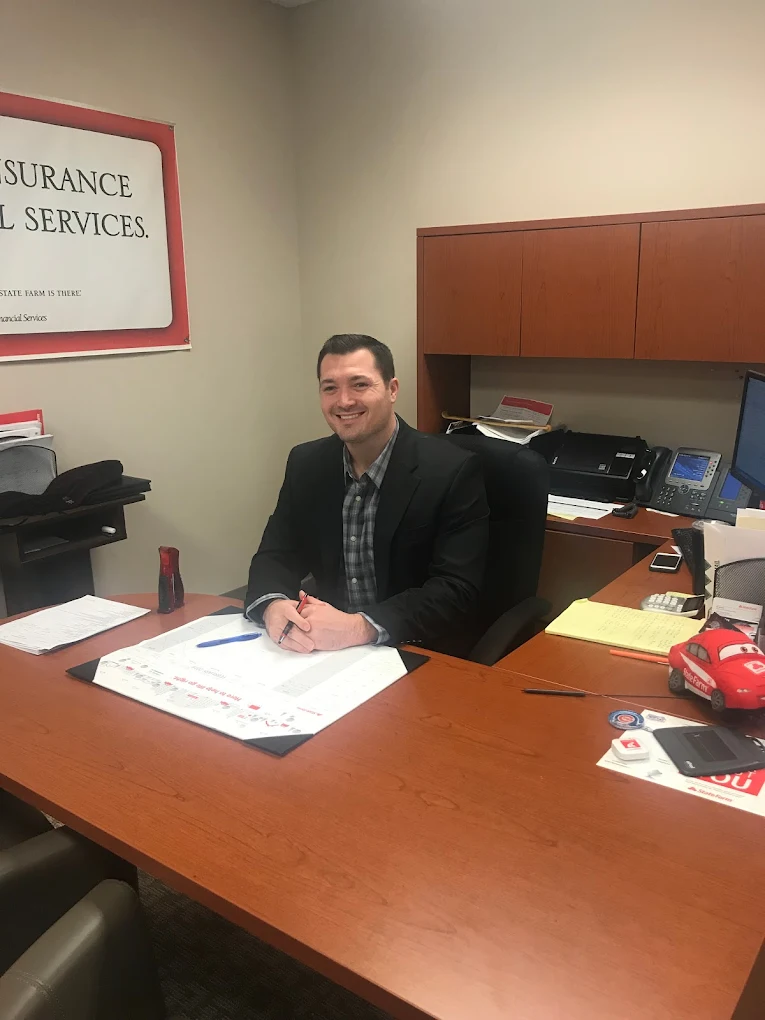
An agent is not just a salesperson, they are the link between you and the insurer’s underwriting. A good State Farm agent will do more than plug numbers into a web form; they will review coverage options, suggest eligible discounts, and explain trade-offs between premium and deductible. If you search for “Insurance agency near me” or “Insurance agency hammond” you’ll find agents who can meet in person and review the facts with you, which often helps with more accurate quoting.
Agents can also advise on these practical levers: changing the vehicle used as the primary car, adjusting the garaging address if you have a safer location available, or advising on policy effective dates to avoid lapses. They can request reconsideration of declinations or provide guidance for SR-22 filings. If an agent is unable to help, ask them whether State Farm has alternative programs for rehabilitated drivers; sometimes a step-down in underwriting tier occurs after a year without incidents.
Five practical steps to improve a State Farm quote for high-risk drivers
Assemble accurate records and proof of mitigating actions, such as completion certificates for defensive driving or treatment programs. Compare coverages, not just price. Raise deductibles and drop optional coverages you can afford to self-insure, but keep liability at state minimums or above depending on your assets. Ask about discounts that often apply to high-risk drivers, like multi-policy, good student, or pay-in-full incentives. Confirm eligibility rather than assuming. Shop different vehicles on the quote. Moving to a model with higher safety ratings or cheaper repair costs can reduce premiums substantially. Work with a local State Farm agent for re-review and to explore SR-22 timing, reinstatement discounts, and potential underwriting exceptions.Coverage choices that matter more for high-risk drivers
When premiums are high, people instinctively chop coverage to save. That can be the right move if done with eyes open. Liability limits are the backbone of protection; carrying only the state minimum can leave you exposed if you cause serious injury or property damage. If your assets are limited and you live in a no-fault state, you might accept higher risk. If you own a home or have savings, I advise keeping liability higher. A common practical split I see is carrying at least 100/300/100 on the policy for drivers who cannot tolerate the risk of being underinsured.
Collision and comprehensive protect your vehicle. If your car is older and its value is low relative to the annual premium, dropping collision might make financial sense. For many high-risk drivers, converting collision to a higher deductible, say $1,000 instead of $500, cuts the annual premium but still leaves meaningful protection. You will trade more out-of-pocket if you have a claim, so only do this if you can afford the larger deductible.
Uninsured motorist and medical payments coverage are often inexpensive and provide a safety net for injuries when the other driver is at fault or uninsured. In states with high rates of uninsured drivers, these options are worth keeping even for tight budgets.
Vehicle selection: an underrated lever
Insurance cost is largely a function of the vehicle class, repair costs, theft rates, and safety equipment. A compact sedan with strong safety ratings, low repair costs, and an anti-theft device can be 20 to 40 percent cheaper to insure than a luxury SUV. I worked with a client during an auto loan turnover who swapped from a high-value SUV to a used Toyota Camry. His quote dropped by roughly 30 percent while his mobility needs were still met.
If you are in market for a car, get a preliminary insurance quote on the exact VIN or model before buying. Use the State Farm agent to pull a quote on multiple models so you can compare final ownership costs, not just sticker price.
Timing, lapse management, and SR-22 realities
Gaps in coverage create a significant penalty. A lapse of even 30 days can shift you into a higher rating tier or trigger the need for SR-22 filing in some states. If the root cause of a lapse was unaffordability, ask an agent about short-term options: reduced coverage with an agreed reinstatement date, or a payment plan. Paying a month or two to maintain continuous coverage often beats a steep surcharge that can persist for years.
If you require an SR-22, understand it is a filing that the state uses to track minimum coverage. The SR-22 itself does not raise the premium, the events that require the filing do. However, agents experienced with SR-22 can advise on the minimal coverage that satisfies the court or state and how long the filing will likely be required. Sometimes a well-timed SR-22 filing can be combined with a policy that gives you immediate proof of insurance at a predictable premium.
Discounts that frequently apply to high-risk drivers
There is no universal set of discounts that automatically offset a high-risk surcharge, but some commonly available ones can chip away at the total. Multi-policy discounts when you bundle car and renters or homeowners insurance are real and sometimes reduce overall cost by 10 to 20 percent. Pay-in-full discounts, paperless or e-billing discounts, and safety device credits are incremental but add up. If you are a student with good grades, a good student discount can be a meaningful silver lining for younger drivers.
Two edge cases and how to handle them
Edge case one, commercial use of a personal vehicle. If you drive for a rideshare platform or frequently use your car for deliveries, your personal auto policy likely excludes business use. State Farm has rideshare endorsements in many states, but the coverage and cost will vary. Be upfront about vehicle use with the agent to avoid denials of claims. Buying a commercial endorsement or separate business policy may be more expensive but prevents disastrous claim denials.
Edge case two, drivers with repeated minor violations but no major incidents. Underwriting algorithms sometimes treat multiple minor tickets as risk clustering. Rather than trying to fight each ticket after the fact, it can be financially smarter to enroll in a defensive driving class that removes a ticket or demonstrates remediation. Some states allow ticket dismissal through approved courses; other insurers, including State Farm, may offer point-reduction credit or non-owner policies if you primarily drive others’ cars.
What to expect in negotiation with an agent
Negotiation is often less about arguing rates and more about presenting mitigating facts and options. Start by asking the agent to explain what pushed the rating where it is. Is it a recent accident, a lapse, the vehicle model, or a high commute? Once you have the cause, propose concrete changes: higher deductible, lower mileage estimate, vehicle change, or bundling other lines. Ask the agent to run the quote with those variations in front of you. If the agent cannot match a competitor’s price, ask whether an underwriting review is possible after six months of clean driving. Some agents will mark your file for a re-evaluation.
When to shop other carriers
If State Farm’s quote is significantly higher than two other licensed insurers for the same coverage, you should consider switching. Different carriers weight risk factors differently. For example, some regional insurers are more forgiving on older claims but strict about DUI. Ask the agent if they can match or beat a competitor’s written quote. If not, take the other Kyle Dempsey - State Farm Insurance Agent State farm agent quote to the agent and ask whether the coverage levels are truly comparable. Beware of apples-to-oranges comparisons where one quote includes broader limits or lower deductibles.
Documents to bring when getting a quote
- Driver license, vehicle registration, and current policy declarations, if any. Proof of completion for relevant courses, court documents for reinstatement, and SR-22 forms if applicable. VIN or vehicle details and any anti-theft device receipts.
How to track progress and know when you are improving
Insurance rating tiers tend to improve with time and a clean record. After a major event like a DUI or at-fault accident, many insurers require two to five years before returning to a lower risk tier. Keep a spreadsheet or notes with the date of each ticket, accident, or lapse and the expected eligibility date for discounts or tier changes. Revisit quotes at predetermined intervals, for example at 12 months and again at 24 months. Small improvements in the driving record plus bundling or a new vehicle can compound into noticeable savings.
A final practical anecdote
I remember a client with two at-fault accidents in three years and a lapse due to financial hardship. Initial State Farm quotes were more than the client could handle. We worked with a local State Farm agent, documented a completed defensive driving program, and moved the garaging address to a less risky location where the client parked overnight with family. We increased the deductible on collision to $1,000 and kept liability at 100/300/100. Within eight months the premium dropped by about 22 percent. It was not cheap, but the plan was gradual and sustainable, and after two years with no incidents the carrier reclassified the client into a better tier.
If you search for “Insurance agency near me” or specifically “Insurance agency hammond” you will find agents who can sit down and run realistic scenarios. Use those sessions to ask for written quotes with variations, and bring the documents that prove remediation actions. State Farm insurance can be part of a practical recovery plan from high-risk status if you use the agent’s access and the carrier’s flexibility intelligently.
Getting the best State Farm quote as a high-risk driver is rarely instantaneous. It takes careful documentation, willingness to adjust coverage, smart vehicle choices, and a working relationship with an agent who will run the numbers and advocate where possible. Shop smart, keep records, and remember that small changes now can create larger savings over the next few years.